Business Portfolio Approach
Fujikura Kasei has introduced the business portfolio approach from the 11th mid-term management plan.
In all our business segments̶the coatings for plastics, architectural coatings, electronic materials, functional polymers/polymers & resins, and synthetic resins businesses̶we will“ identify social issues and ascertain the values we can provide” and strive to achieve our targets and sustainable growth of our businesses.
Coatings for Plastics
Basic policy for value creation
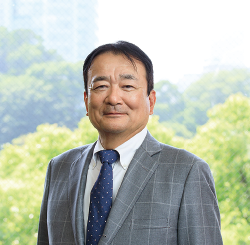
Senior Vice President and General Manager of the Coatings for Plastic Division
Hitoshi Kawaguchi
Business overview and value creation policy
Overview, features, and strengths
The coatings for plastics business is a pioneer in its field, providing coating materials with excellent design and functionality for diverse sectors and leading the industry in Japan and overseas. In the automobile market, we have gained a significant global market share and high trust in our car interior and exterior products. In other markets as well, we offer a wide range of products that satisfy diverse needs, such as coatings for cosmetics containers and films.
Review of the second year of the 11th mid-term management plan
Based on our “Basic Policy for Value Creation,” the Coatings for Plastics business has continued to pursue the functional performance needed to address the evolving environment and diverse challenges accompanying the transition to a decarbonized society. At the same time, we are working to create new value, deliver it globally through our international network, and advance our technologies and services at a pace that surpasses the speed of external change.
In fiscal 2024, we observed a strengthening awareness among our customers and end users regarding environmental responsibility and decarbonization. Recognition of our environmentally friendly and decarbonization-oriented products—such as biomass-based materials, plating alternatives, and functional films—has grown, leading to an increase in new adoptions.
In light of these developments, we recognize that we are making steady progress toward the final year of the current mid-term management plan and toward the next mid-term plan.
FY2025 initiatives and FY2026 objectives
In fiscal 2025, we will continue to expand our lineup of water-based, biomass, and high-solid products, while further promoting the market expansion of plating alternatives and film coating applications. Through energy-saving initiatives such as low-temperature and rapid-drying processes, we aim to make these environmentally friendly product groups—designed to reduce CO₂ emissions and minimize environmental impact—our core offerings.
Moreover, in light of increasingly complex geopolitical risks and supply chain disruptions arising from U.S. trade and tariff policies, we will strengthen our organizational agility and adaptability. As the mobility environment and market structures continue to evolve rapidly, we will remain committed to sustainably creating and delivering new value.
Strengthening priority businesses
Film coating technology as a painting alternative to reduce CO₂ and VOC emissions
In the Coatings for Plastics business, we are working to reduce CO₂ and VOC (volatile organic compound) emissions by leveraging our accumulated expertise in spray coatings for plastics. We are developing paints for film coating methods that are attracting attention as alternatives to traditional painting, including high-solid formulations and 100% solid paints containing no organic solvents.
Through these efforts, we are contributing to mitigating climate change and reducing environmental impact while expanding the development of sustainable technologies and product offerings.

Policies under the mid-term management plan

Architectural Coatings
Basic policy for value creation
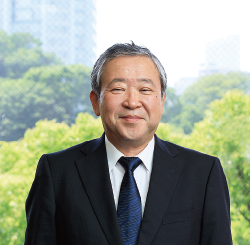
Senior Vice President and
General Manager of the
Architectural Coatings Division
Hisashi Kajiwara
Business overview and value creation policy
Overview, features, and strengths
The architectural coatings business is centered on architectural coatings for residential houses. Dedicated coatings and specifications are customized for each housing manufacturer, to deliver values such as high durability, functionality, and design. In the area of coatings for the renovation sector, our Group company provides high-quality construction under a manufacturer-responsible construction system.
Review of the second year of the 11th mid-term management plan
In fiscal 2024, we advanced product design from two complementary perspectives: “developing materials with an understanding of construction needs,” and “executing construction with deep knowledge of materials.” As a result, we introduced a high-quality, water-based topcoat that delivers excellent workability. This innovation enables water-based paints to provide the smooth finish previously attainable only with solvent-based paints, while achieving a balance of ultra-durability, solvent-free formulation, and low carbon emissions.
In response to the growing social challenge of aging infrastructure, we also began providing samples of newly developed paints for which basic design has been completed. Having verified mass-production readiness, we have completed the mass production validation and established a supply system capable of supporting the transition to application trials.
FY2025 initiatives and FY2026 objectives
Looking ahead to fiscal 2026, we will expand the application of the water-based topcoat introduced in fiscal 2024, contributing to the realization of a decarbonized society. At the same time, we will further advance the development of coatings designed to address aging infrastructure, a growing social issue.
To enhance safety, quality, and efficiency in coating operations, we will continue to provide regular training programs and briefing sessions for our sales and construction personnel. These initiatives are aimed at ensuring the transfer of technical expertise and know-how, while keeping our teams updated on evolving social and market environments.
Strengthening priority businesses
Realizing comfortable and convenient living environments through solvent-free solutions
Solvent-based paints have traditionally been used for the renovation of components other than exterior walls in detached houses, as they provide the “smooth finish”, “high durability”, and “glossy appearance” required for such applications. It has long been considered difficult for conventional water-based paints to meet these performance requirements. However, by adopting a proprietary resin developed in-house, we have successfully overcome these challenges.
In our core market—the housing renovation sector—the shift toward solvent-free, environmentally friendly solutions is accelerating. We plan to expand the application of our new product to a broader range of users.

Policies under the mid-term management plan

Electronics Materials
Basic policy for value creation
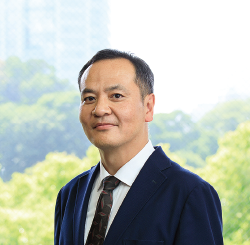
Executive Director and
General Manager of the
Electronic Materials Division
Takahiro Ishii
Business overview and value creation policy
Overview, features, and strengths
In 1957, the electronic materials business marketed the electroconductive resin DotiteTM which it jointly developed with the Electrical Communication Laboratory of Nippon Telegraph and Telephone Public Corporation (now NTT) and succeeded in industrializing for the first time in Japan. For more 60 years thereafter, we have served and contributed to people's lives and industries as a pioneer in step with the growth of the electronics industry.
Review of the second year of the 11th mid-term management plan
In the Electronics Materials business, we are advancing our initiatives with a long-term outlook toward the 2030 business environment, focusing on three priority fields: the “next-generation automotive industry,” the “information and communications industry,” and the “healthcare industry.” Guided by the Japanese Cabinet Office's vision of “Society 5.0” as a model for future society, we are developing our business in ways that contribute to this transformation.
In the automotive industry, the growing adoption of advanced driver-assistance systems (ADAS) has increased the number of highly reliable control and sensor components. Our conductive polymer-based electrode pastes for capacitors and conductive adhesives have been newly adopted for these applications.
In the information and communications industry, we developed and launched a high-frequency electromagnetic wave-absorbing coating designed to support high-speed communications and IoT infrastructure. We have achieved 20 dB (90%) electromagnetic wave absorption with an ultra-thin 150-micron film. Going forward, we will continue to strengthen our proposal activities to help address market and customer challenges.
In the healthcare industry, our stretchable conductive paste has been adopted for use in healthcare sensors, supporting advancements in remote sensing and wearable devices. We will continue developing products for a wide range of stretchable sensor applications, contributing to the evolution of healthcare and wellness.
FY2025 initiatives and FY2026 objectives
In the Electronics Materials business, our core products currently use silver powder as a primary raw material. At the same time, we are actively pursuing the development of silver-free materials to help reduce both environmental impact and product costs, particularly for capacitor and power semiconductor applications.
Looking ahead, Dotite® will continue to drive innovation and product development that contribute to addressing social challenges.
Strengthening priority businesses
"Stretchable substrate" for wearable healthcare devices
Stretchable wearable devices use flexible and elastic materials to enhance comfort while wearing the device and respond smoothly to natural body movements. In such devices, it is essential to maintain stable electrical conductivity even as the materials move in sync with the body.
Our stretchable conductive materials are compatible with a variety of substrates, including silicone and urethane, and demonstrate high conductivity stability and exceptional durability under repeated stretching and movement.
Beyond wearable devices, we are actively expanding into soft robotics, medical equipment, and automotive applications, where both flexibility and reliability are critical. In addition, we are pursuing global market expansion, particularly in Europe and North America.

Policies under the mid-term management plan

Functional polymers / polymers & resins
Basic policy for value creation
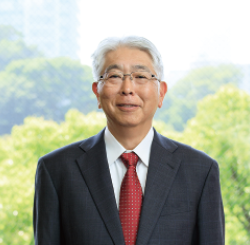
Executive Director and General Manager of the Functional Polymers/Polymers & Resins Division
Takayuki Ishimoto
Business overview and value creation policy
Overview, features, and strengths
The functional polymers/polymers & resins business is aiming to expand in new fields such as fine materials, high-function polymers, sintered resins, and new in vitro diagnostic pharmaceuticals and materials. In each field, we will develop products that satisfy customer needs and respond to their trust by leveraging technologies we have cultivated to date, including suspension microparticle technology, high-performance emulsion synthesis technology, urethane synthesis technology, triblock technology, and UV technology. In the medical materials department, we have developed latex reagents that incorporate polymer properties and advanced into the field of in vitro diagnostic pharmaceuticals for diabetes and rheumatoid arthritis. These products are helping to improve people's daily lives in inconspicuous ways.
Review of the second year of the 11th mid-term management plan
In the Functional Polymers/Polymers & Resins business, we continued to expand into new fields. In the fine materials segment, in addition to enhancing the functionality of our conventional acrylic resins, we have achieved growth in new product lines such as urethane- and polyester-based materials. In the adhesives segment, we are broadening our product offerings through the application of triblock polymer technology. Going forward, we will continue to promote new product development and strengthen our proposal activities to address diverse customer needs, steadily building a foundation for further success.
In the diagnostic pharmaceuticals area, our particle materials that are used as raw materials for reagents have shown steady growth. Through products such as diabetes test reagents, we aim to contribute to promoting healthier, more secure lifestyles.
FY2025 initiatives and FY2026 objectives
We have achieved our sales target for the final year of the mid-term management plan ahead of schedule in fiscal 2024, and will take bold, proactive steps in fiscal 2025 to reach even greater heights. In particular, we will strategically allocate resources to the “Young Leaves” and “Sprouts” fields, driving further expansion in fine materials and next-generation adhesives. By accelerating product development and market expansion leveraging new technologies, we aim to strengthen our existing markets and create new ones, thereby establishing a solid foundation for growth leading into the next mid-term management plan.
Strengthening priority businesses
Block polymers for smartphones and displays that support comfortable living
Our technologies are used in smartphones and displays, both of which are indispensable to comfortable and convenient modern living. These devices incorporate various types of films made from different materials, which can sometimes lead to issues such as warping or delamination due to differences in material properties.
Our block polymers exhibit excellent performance in adhesion and stress relaxation between dissimilar materials, as their coating strength and elongation can be precisely controlled.
Though not readily visible, these materials play a vital role in making everyday life more comfortable and convenient.

Policies under the mid-term management plan

Synthetic Resin
Basic policy for value creation
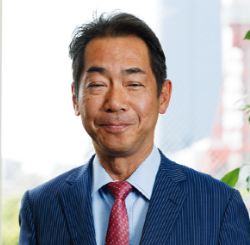
Tohkoh Jushi Co., Ltd.
President
Manabu Ikegami
Business overview and value creation policy
Overview, features, and strengths
The synthetic resins business is undertaken by Tohkoh Jushi Co., Ltd. (founded in 1964), a trading company specializing in the sale of raw materials and plastic sheets, films, and processed products. We do not simply supply products to customers, but we also enga ge in fine-tuned sales and follow-up activities. For example, we provide product developme nt information based on the management and sales strategies of our customers, introduce new materials and products, and make project proposals from the selection of raw materials to product sales.
Review of the second year of the 11th mid-term management plan
In fiscal 2024, the Synthetic Resins business actively pursued raw-material trading through its overseas bases, achieving progress that was generally in line with the plan. In Japan, demand from lighting and signage manufacturers increased, driven by the reshoring of production by assembly manufacturers and the accelerating shift to LED lighting.
Meanwhile, in materials for lithium-ion batteries, despite efforts to ensure a stable supply, demand declined sharply due to the sluggish EV market in Europe.
In response to these market changes, we initiated efforts to build new supply chains and cultivate new demand. These included the handling of new imported products and accelerating the acquisition of new customers and projects, positioning the business for renewed growth.
FY2025 initiatives and FY2026 objectives
In fiscal 2025, although growth in existing markets is expected to slow, we will continue strengthening proposals for high value-added products to lighting manufacturers and others, while expanding sales that leverage our processing technologies. In the interior building materials field, we will work to deepen customer relationships and broaden our product lineup.
In raw material trading, a challenging market environment is anticipated in the first half due to shifts toward domestic procurement and tariff policies. Nevertheless, we will develop diversified proposals that extend beyond single-material offerings, aiming for a market recovery in the second half. For lithium-ion battery materials as well, we will advance new proposals in anticipation of a rebound in demand.
Strengthening priority businesses
Realizing business growth through material and chemical recycling and triangular trade
In the Synthetic Resins business, we are leveraging our strength in proposal-based sales as a specialized trading company to help address social challenges by promoting the market introduction of material-recycled and chemical-recycled products being developed by resin manufacturers.
Furthermore, by enhancing triangular trade between Japan, North America, and Asia in collaboration with our overseas bases and strengthening exports of high value-added products, we are committed to achieving sustainable business growth on a global scale.

Policies under the mid-term management plan

Production
Basic policy for value creation
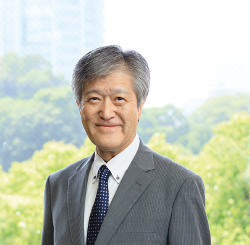
Executive Director and Director of Sano Plant
Kazuhiro Suto
Business overview and value creation policy
Features and strengths
Fujikura Kasei’s production department has kept in step with market changes an d diverse customer needs from its flagship Sano Plant and production bases in and outside of Japan. Always with priority on safety, our company produces diverse products under a sophisticated quality control system, including coating materials, architectural coatings, conductive pastes, and acrylic resins. To ensure proper manufacturing work and quality value from the customer perspective, various management system certifications have been acquired, nam ely ISO 9001, IATF 16949 (electronic materials division), ISO 13485 (medical materials d epartment), ISO 14001, and ISO 45001.
Review of the second year of the 11th mid-term management plan
In fiscal 2024, our production activities were guided by the Basic Policy for Value Creation, focusing on “increasing productivity” and “addressing social issues through our business activities.”
As part of our efforts to “increase productivity,” we worked to prevent human error by utilizing internally developed training videos, which contributed to reducing operational mistakes.
To “address social issues through our business activities,” we promoted initiatives “centered on logistics efficiency” and “autonomous maintenance.” In logistics, transitioning more truck transportation to expressways led to shorter driver working hours. In autonomous maintenance, replacing parts in-house in response to equipment failures extended the lifespan of machinery that would otherwise have been discarded, helping to reduce waste.
Going forward, we will continue to pursue both “increasing productivity” and “addressing social issues through our business activities” through continuous improvement efforts.
FY2025 initiatives and FY2026 objectives
In fiscal 2025, we plan to make proactive capital investments to further strengthen our stable supply system. Specifically, we will begin construction of a new coatings plant (Sano Renewal Step II). Prioritizing safety, we will establish a state-of-the-art production system equipped with the latest machinery and utilities to meet customers’ increasingly diverse and sophisticated needs. At the same time, we will work to reduce environmental impact and improve energy efficiency through the introduction of energy-saving equipment.
Additionally, in line with our Basic Policy for Value Creation, we will continue efforts toward “increasing productivity” and “addressing social issues through our business activities.” Through these initiatives, we aim to ensure on-time delivery, maintain a robust quality assurance system, and reinforce our commitment to environmental responsibility.
Furthermore, as social expectations regarding chemical safety continue to rise, we will implement comprehensive safety measures based on risk assessments, to ensure proper handling of chemical substances and fulfill our social responsibility.
Policies under the mid-term management plan

